San Antonio Lifestyle Districts Worth Visiting
San Antonio’s most memorable lifestyle districts each offer a different mix of dining, architecture, culture, and walkability. Some are best known for riverfront restaurants and boutique hotels, while others stand out for historic homes, public art, or family-friendly suburban amenities.
Whether you want to explore a lively food district, stroll through a preserved historic neighborhood, or spend time in a more residential part of the city, San Antonio has several areas worth adding to your itinerary.
The Pearl District: Riverfront Dining and Culture North of Downtown
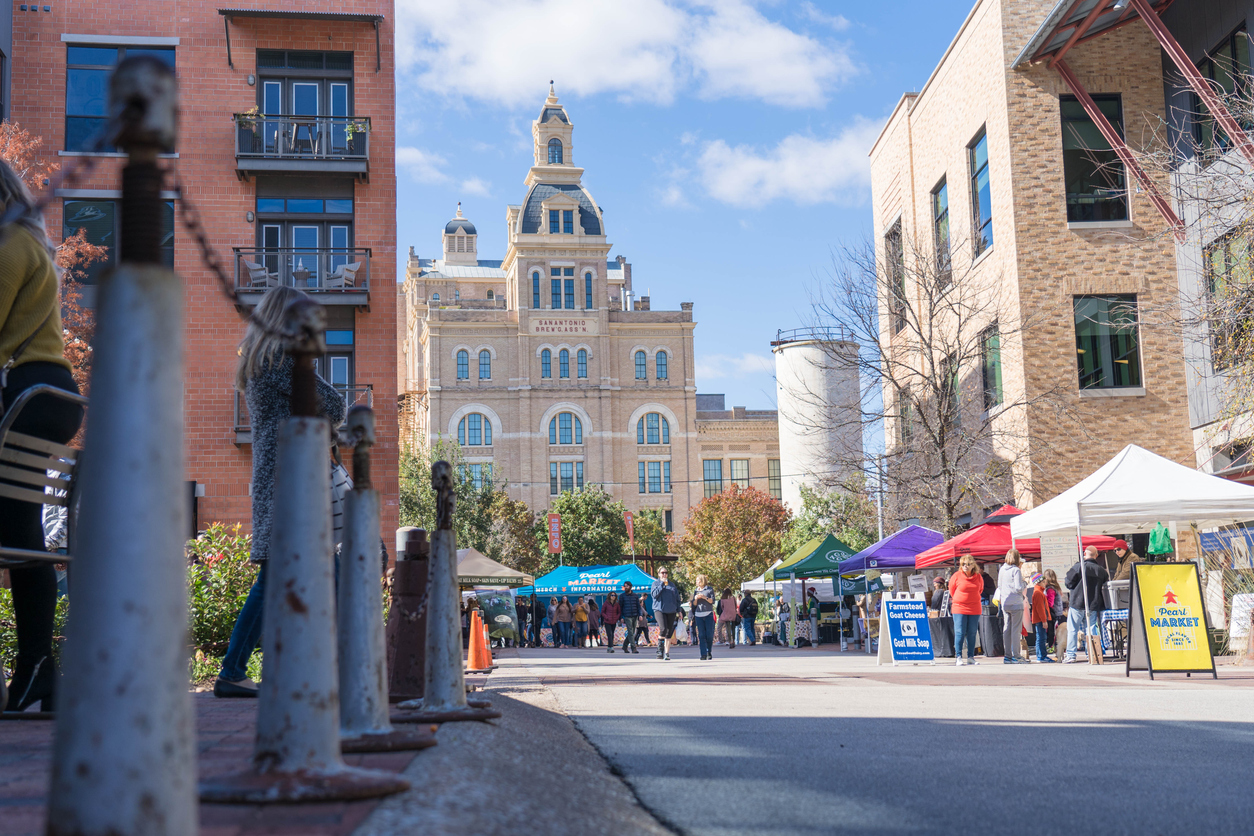
Just north of downtown along the Museum Reach of the San Antonio River Walk, the Pearl has become one of the city’s best-known lifestyle districts. The area centers on the restored historic brewery campus and includes Hotel Emma, a riverfront hotel housed in the former brewhouse, along with restaurants, shops, public spaces, and regular community events. The Culinary Institute of America’s Texas campus is also located at Pearl, reinforcing the district’s reputation as one of San Antonio’s top food destinations.
The district works especially well for visitors who enjoy walkable dining, weekend markets, and arts programming. Its setting along the river and close connection to downtown make it one of the easiest areas to combine with a larger day of sightseeing.
Alamo Heights: Tree-Lined Streets and an Established Neighborhood Feel
Alamo Heights, just northeast of downtown, is one of San Antonio’s best-known residential enclaves. The neighborhood is known for its mature trees, attractive homes, and proximity to cultural attractions such as the McNay Art Museum and Brackenridge Park. It also has a reputation for strong schools and a highly educated population, which contributes to its long-standing appeal for families. Recent census-based profile data places the city’s population at 7,492, with high income and education levels compared with broader regional averages.
For visitors, Alamo Heights feels calmer and more residential than downtown. It is a good choice for people who want neighborhood restaurants, shaded streets, and easy access to nearby museums and parks without staying in the center of the tourist district.
Downtown San Antonio and the River Walk: Walkable Urban Energy
Downtown San Antonio remains the city’s most visited urban district, anchored by the River Walk, historic sites, hotels, museums, and event venues. The River Walk now extends about 15 miles when the downtown stretch is combined with the Museum Reach and Mission Reach, giving visitors a long, connected corridor for walking, dining, and sightseeing. The downtown section is the busiest and most restaurant-focused, while the northern and southern reaches offer a more scenic and cultural feel.
This district is ideal for travelers who want easy access to restaurants, hotels, attractions, and river barges without driving much once they arrive. It is the most practical choice for first-time visitors who want to stay close to San Antonio’s most recognizable landmarks.
King William: Historic Homes and Southtown Character
Just south of downtown, King William is one of San Antonio’s most distinctive historic neighborhoods. The district developed in the second half of the nineteenth century and is closely associated with German immigrant families who built substantial homes along tree-lined streets near the river. The neighborhood was recognized as a local historic district in 1968 and added to the National Register of Historic Places in 1972.
Today, King William appeals to visitors who enjoy historic architecture, quieter residential streets, and easy access to Southtown’s galleries, restaurants, and cafés. Rather than focusing on an exact count of Victorian houses, it is more accurate to describe the district as a well-preserved collection of nineteenth-century homes and related historic landmarks.
San Antonio’s West Side: Murals, Culture, and Community Identity
San Antonio’s West Side is especially significant for visitors interested in public art, Chicano cultural history, and community-based creative work. The area is known for its concentration of murals, many of them connected to the long-running work of San Anto Cultural Arts. One of the best-known examples is “Bienvenidos al Westside,” a five-part mural created through collaboration with local youth and community partners. Its imagery includes everyday neighborhood scenes such as taquerias, Spurs fans, and mariachi traditions.
For visitors, the West Side offers a different kind of lifestyle district experience—less centered on polished retail and more grounded in community identity, public art, and neighborhood history. It is especially appealing for travelers who want to explore a side of San Antonio beyond the usual downtown routes.
Stone Oak: North San Antonio’s Suburban Lifestyle Hub
In north San Antonio, Stone Oak offers a more suburban lifestyle district with shopping centers, residential communities, medical offices, and access to major roads such as US 281 and Loop 1604.
It is widely described as a master-planned community with parks, trails, golf access, and neighborhoods that range from more attainable single-family homes to higher-end properties. Families are often drawn to the area because of its schools, neighborhood amenities, and relative convenience for commuting.
Stone Oak is not the place to visit for historic architecture or dense riverfront walkability, but it does appeal to travelers who want to see a more modern side of San Antonio with shopping, dining, and suburban-style conveniences.
Match Your Style to the Right District
The best district to visit depends on what kind of experience you want. The Pearl is especially strong for food lovers and visitors who enjoy a polished mixed-use environment. Downtown and the River Walk are the easiest for classic sightseeing and walkable access to major attractions.
King William and Southtown work well for travelers interested in historic streets and art spaces. Alamo Heights offers a quieter neighborhood atmosphere, while Stone Oak shows a more suburban side of the city. The West Side is the strongest choice for visitors who want to explore murals and community-centered cultural history.
When to Go: Events and Seasonal Timing by Neighborhood
San Antonio’s districts feel different depending on the time of year. The Pearl stays active year-round because of its restaurants, public spaces, and market culture. Southtown and Blue Star are especially lively during First Friday, when galleries and nearby venues attract large evening crowds.
Downtown becomes particularly festive during the holiday season, when lights and events transform the River Walk. Spring and fall are often the most comfortable seasons for walking between districts because of the milder weather.
Getting Around San Antonio Between Districts
San Antonio’s lifestyle districts are spread out enough that most visitors will use a combination of walking, rideshares, and driving. Downtown and the River Walk are the easiest to explore on foot. The Pearl also connects well to the River Walk via the Museum Reach.
Districts such as Alamo Heights, Stone Oak, and much of the West Side are more practical by car or rideshare. Visitors planning to combine several neighborhoods in one day should think about parking and traffic in advance, especially during weekends or events.
One Day or One Weekend: Simple Ways to Explore
If you have one day, pairing Downtown + the River Walk + Pearl makes the most sense because those areas connect well and offer the strongest mix of sightseeing and dining. If you have a full weekend, you can expand to King William/Southtown, add an art- or mural-focused stop on the West Side, and spend time in Alamo Heights or Brackenridge Park for a more neighborhood-oriented experience. That mix gives a broader look at how different San Antonio districts reflect different parts of the city’s identity.